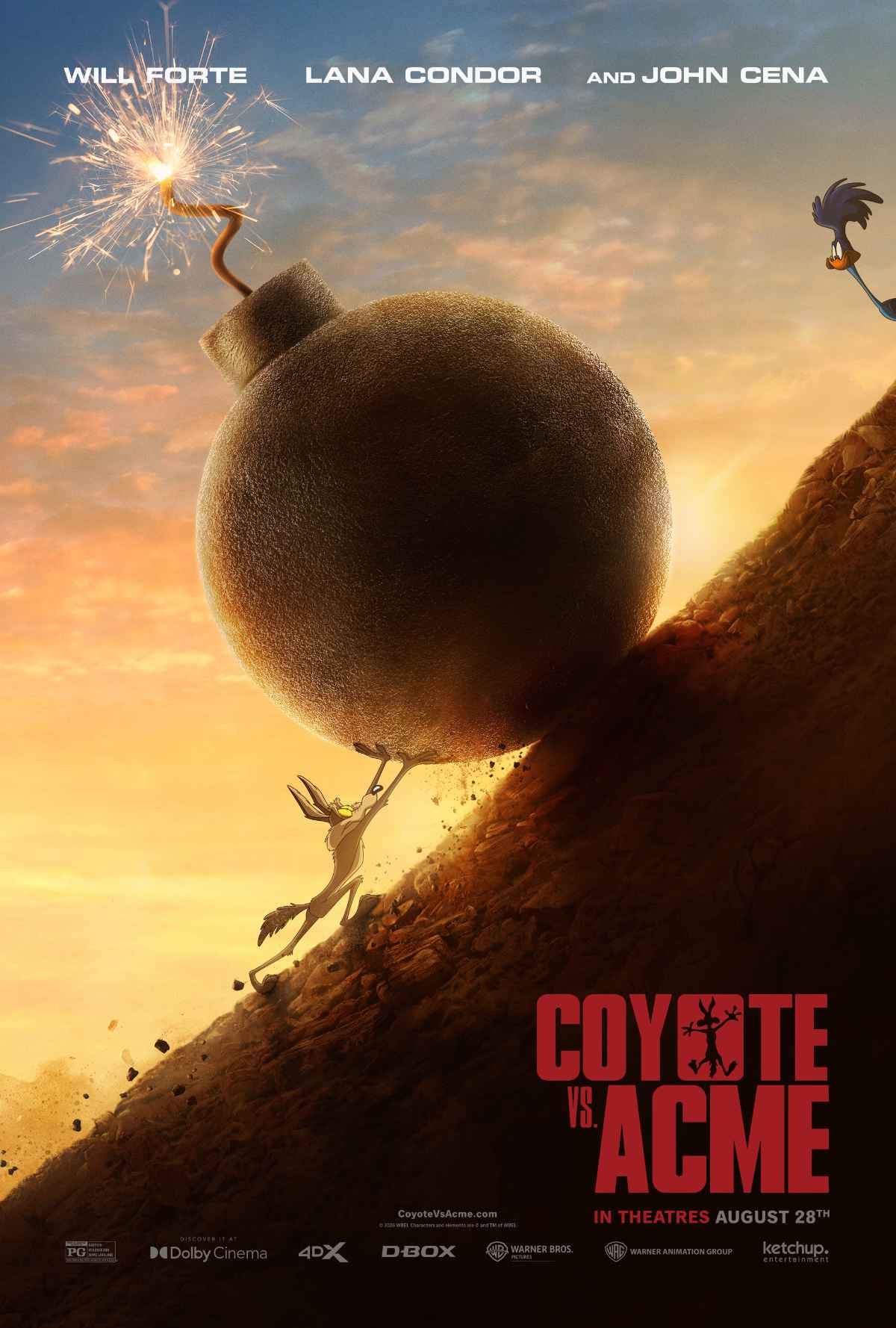
Coyote vs. ACME Review
A little background before we get into the schematics of Coyote vs. ACME, and I’ll probably be showing my age a little bit: we used to have this cultural thing called Saturday morning cartoons. Before cable, before the Cartoon Network, every Saturday morning, all the major television networks would air cartoons for kids that were basically corporate engines for selling us toys and breakfast cereal.
We (and I mean Gen-Xers) would get up at the crack of dawn, pouring heaping bowls of the diabetes-inducing sugary stuff, and sit in front of the TV to be entertained. It was empty, vacuous stuff, but that was the routine, and ask any Gen Xer about Saturday morning, and they’ll get a wistful look in their eyes, of simple joys in a deceptively simpler time.
Towards the end of the morning, there was always an hour-long block of Warner Brothers Looney Tunes and Merrie Melodies cartoons, which were easy enough to show, as they were mostly created during the 1940s and 1950s, featuring short cartoons of Bugs Bunny, Daffy Duck, Porky Pig, and other staples of Warner Brothers.
The animators – Tex Avery, Chuck Jones, Friz Freleng, and others – would create these 5-7-minute shorts of wonderful anarchy, organized chaos that used to play before movies back in the day, but, as Saturday morning fare, fit the bill quite nicely.
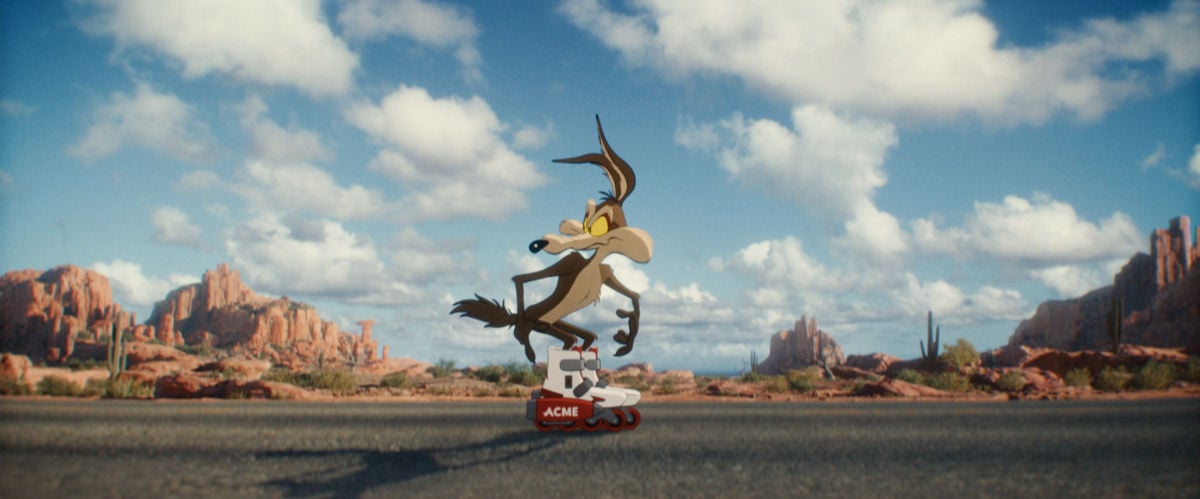
I adored Looney Tunes, and even deep-dived a little bit into the lore. Bugs Bunny was a wise-ass prankster, and so was Daffy, but Daffy had the distinct disadvantage of being bug-eyed crazy. Porky Pig was a wholesome, although clueless, guy who had a run of bad luck. And then, of course, was the eternal struggle of one super genius Wile E. Coyote (Carnivorous Vulgaris) as he endlessly pursued his prey, the Roadrunner (Acceleratti Incredibus) on the backroads of the American Southwest.
The bulk of these cartoons were animated by Chuck Jones, who is truly one of the greatest animation directors ever to live. There’s something to a Jones cartoon that isn’t there in other ones from other animators – a punch and an urgency that gives those shorts an energy that feels like captured lightning.
I watched Looney Tunes cartoons well into my adult years and felt (and still feel) no shame in it. These animators didn’t just make cartoons. They satirized the news of the day and popular culture, and while the reasons behind the satire have mostly faded over time, the power and excitement of those shorts remain. They are truly timeless.
And more importantly, they helped build the Warner Brothers brand, giving them distinction and the idea that Warner Brothers wasn’t just a faceless corporation, but one that had its finger on the pulse of American culture. And for a long time, Warner Brothers was the studio that went off the beaten path – many of the formative films from the 1960s and 1970s came from them. I’m not saying that the Looney Tunes were instrumental in that, but maybe they were. Maybe they were indicative of the studio’s prevailing attitude. Make entertaining films that matter.
Times have changed, and the corporatization of movie studios has been driven by a focus on making content rather than art (and there is a difference, my friends). Warner Brothers has especially changed under the rule of David Zaslav, and the pending sale of the studio to David Ellison’s Paramount dominates the entertainment news cycles.
While I have opinions about the merger, my role here is to review a movie, and I am not knowledgeable enough about the economics of Hollywood to have an informed take. When WB threatened to vault Coyote vs. ACME in this climate, a finished film waiting for release, the motives seemed on the surface to be purely economic.
Two things – first, this wasn’t a purely economic decision. Not with what this movie has to say. That would be a disingenuous claim on the studio’s part.
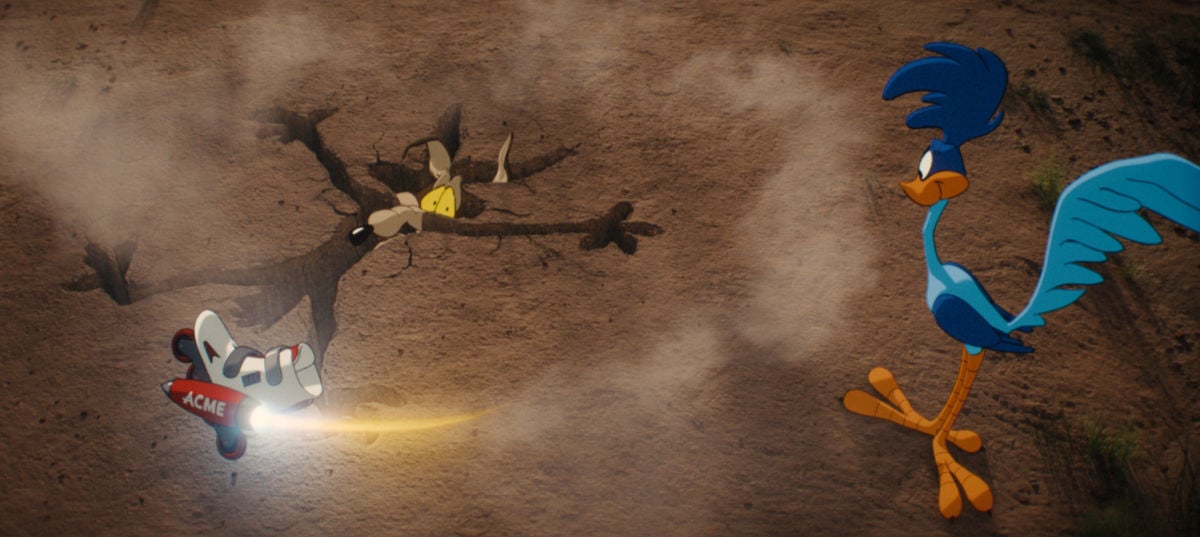
Second, I know art when I see it. And Coyote vs. ACME is Art. It’s a film made in the satirical and irreverential spirit of those Looney Tunes cartoons of my youth, but more importantly, it has Something To Say – about the empty, content-full media world we find ourselves in, about how corporations seem to increasingly dominate our lives every day, offering nothing new while requiring us to participate and even encourage their malfeasances, and how our struggles to fight the tides may end in failure, but also define and inspire us.
Granted, when this movie was conceived and made, the filmmakers probably didn’t have any other intentions but to make an entertaining, profitable movie. They certainly didn’t intend to become a part of the zeitgeist, but sometimes a piece of art informs the time it was meant to be in. Like Bonnie and Clyde. Or The Wild Bunch. Or The Exorcist.
Yeah, the hyperbole at this point is about as subtle as an anvil dropped off a cliff, and I wouldn’t claim that a live-action/cartoon hybrid children’s film comes close to the quality of those movies. But to paraphrase the Coen Brothers, sometimes there’s a movie – well, it’s the movie for its time and place. It just fits right in there. Coyote vs. ACME is that film.
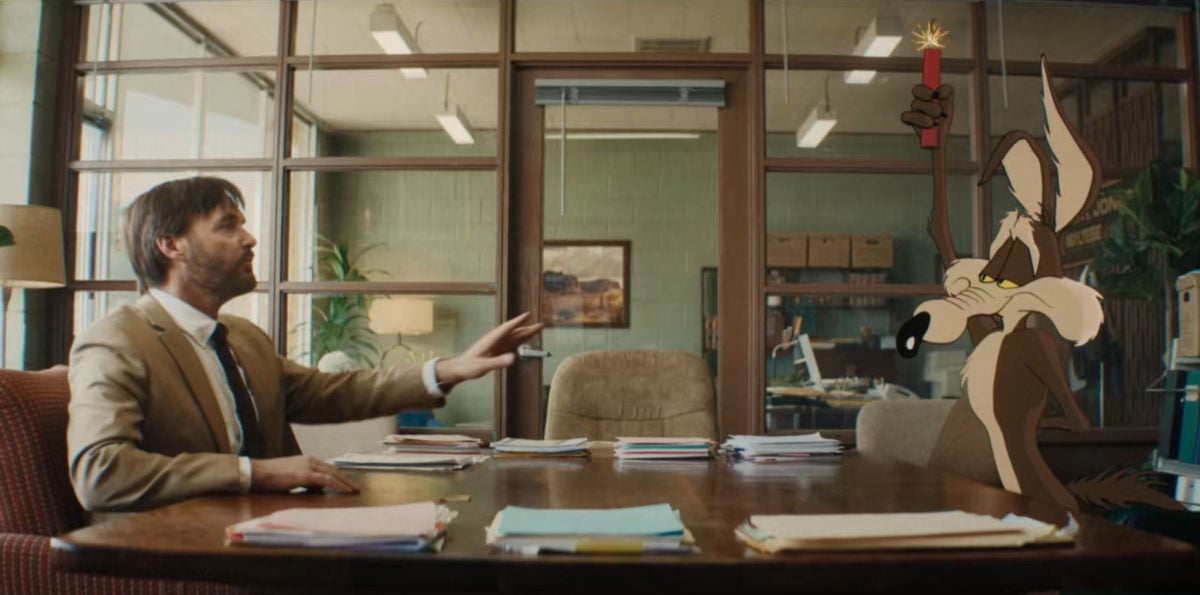
None of this would work if the movie wasn’t as good or as funny as it was, but it’s been a long time since I can recall laughing as hard as I did during this movie. Many of those laughs came from how respectfully the script and the direction treat the Looney Tunes characters, going deep cut at some points and staying true to their essential natures. It helps to know about them going in, but it’s not paramount (heh).
It never forgets that it’s a children’s movie, but it doesn’t treat the children like idiots, either. There’s a moral sense of right and wrong that I think any kid will understand, and any adults will recognize that while Coyote vs. ACME can be silly, it’s not empty silliness. That gives the laughs more poignancy and emotion than it may be apparent at first blush, but those jokes carry weight with you on the way home.
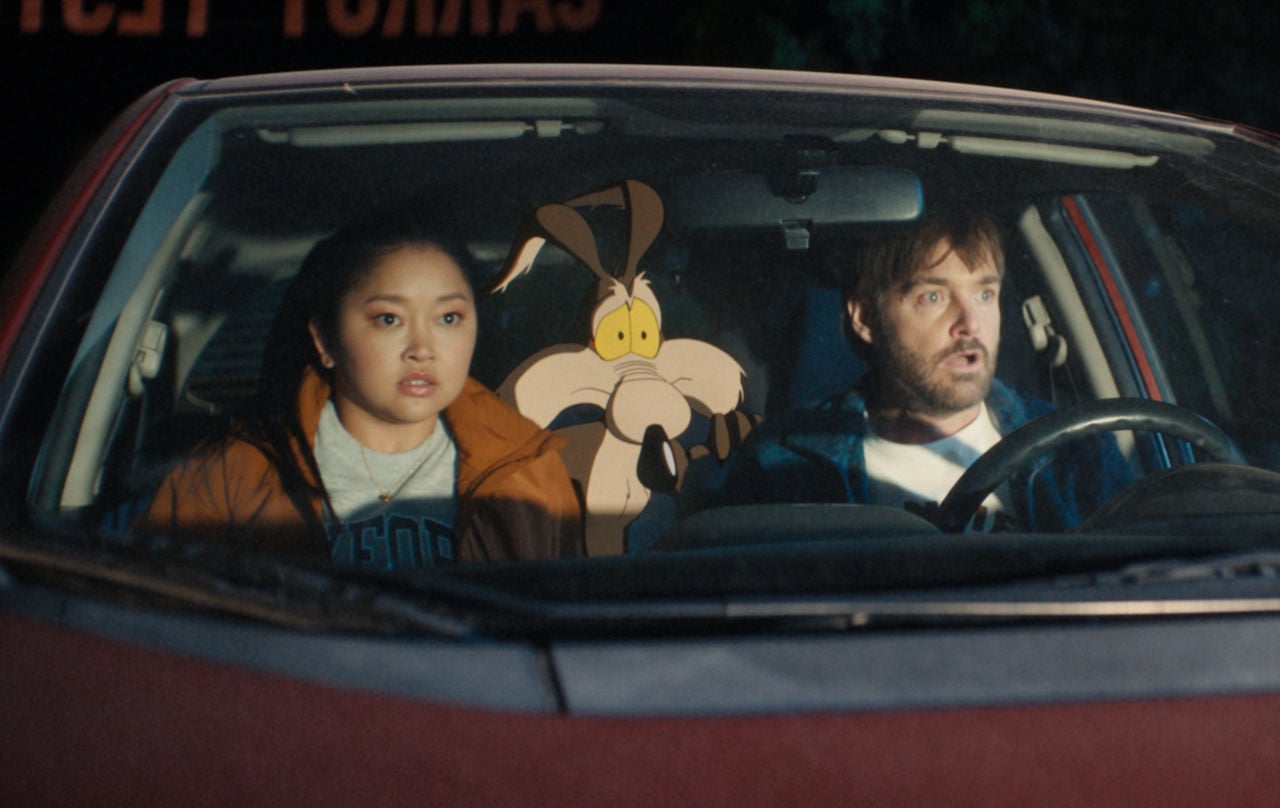
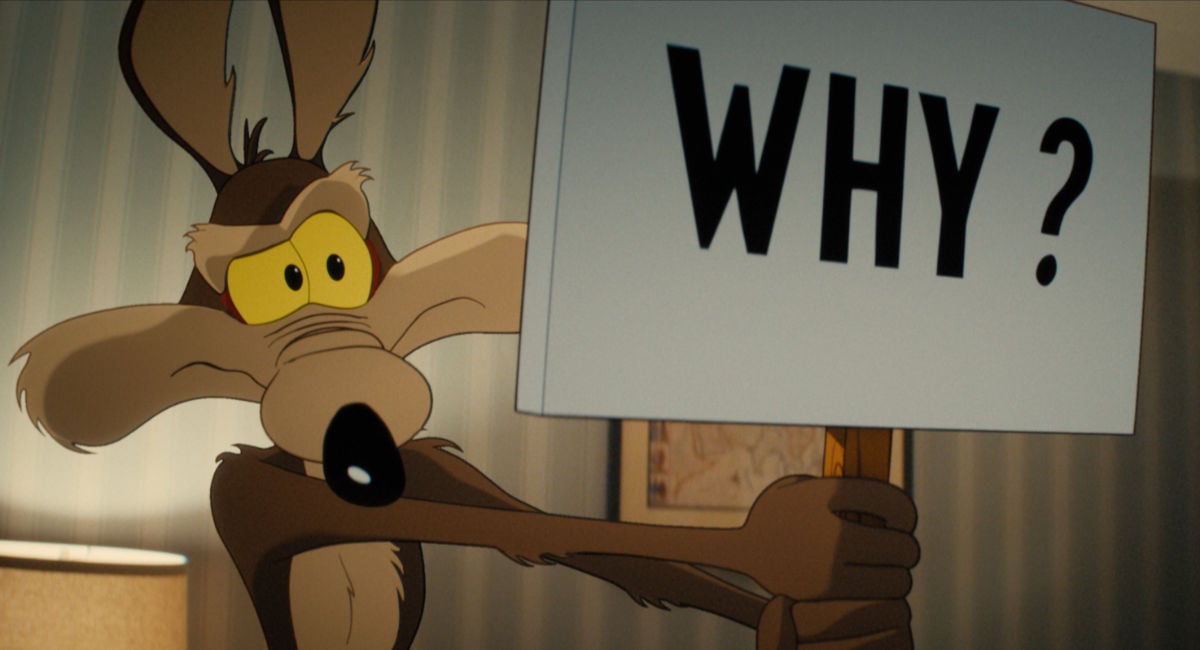
The plot is simple – after infinite unsuccessful chases of the Roadrunner, poor Wile E. is about to throw in the towel when a perfectly timed commercial from attorney Kevin Avery (Will Forte) tells Coyote that it’s not his fault – his never-ending supply vendor ACME is to blame by showering him with defective products. So, Wile E. decides to do what every red-blooded American would do in his situation – sue the pants off them.
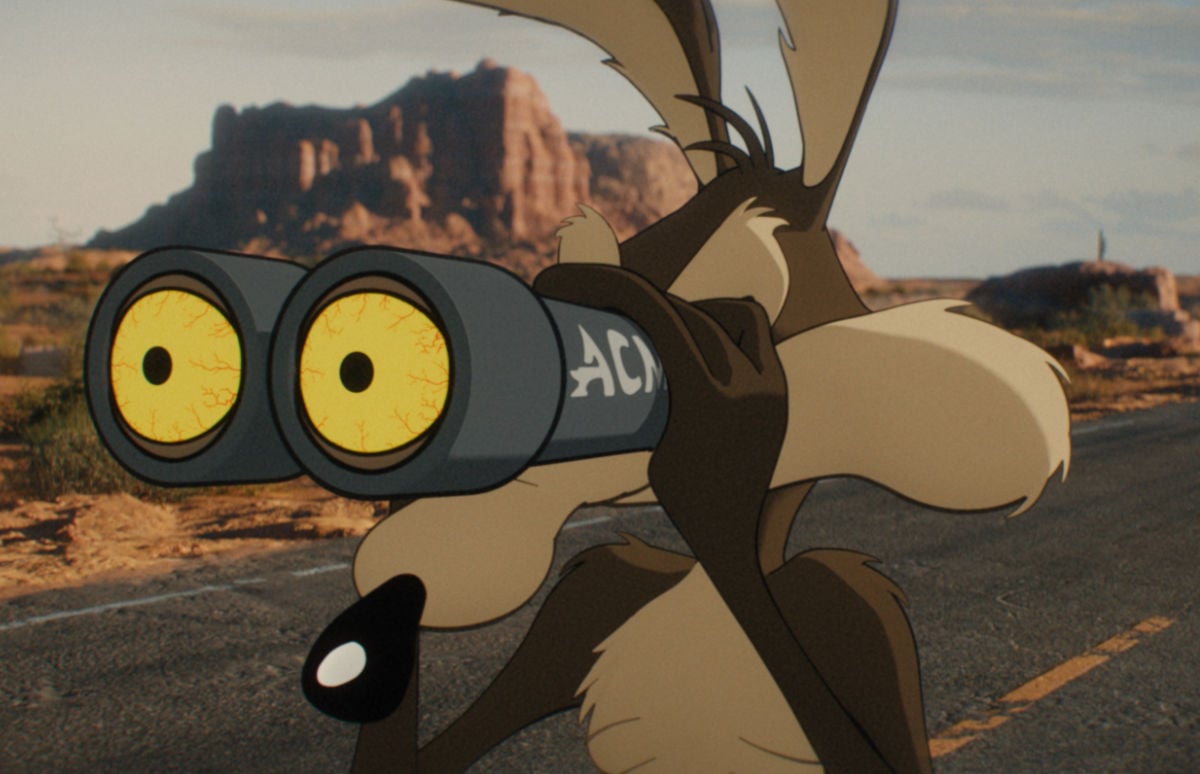
ACME lawyer Buddy Crane (John Cena) tries to buy Avery and Wile E. off, but Wile isn’t having it. He’s got a plan, you see – to get what he wants and just maybe stop the Roadrunner once and for all. But the lawsuit uncovers a deeper, more sinister plot from ACME, and it affects all the Looney Tunes and humans alike.
Director Dave Green (Teenage Mutant Ninja Turtles: Out of the Shadows) and screenwriter Samy Burch (May December) do two important things right out the gate. The first is that they establish a world where, much like Who Framed Roger Rabbit, cartoons and humans co-exist, and there isn’t much explanation as to how. It also follows the fantastical rules of cartoons, where someone could drop a portable hole in the ground, and explosions are more inconvenient than actually dangerous.
Unlike Roger Rabbit, however, the Looney Tunes characters don’t work in Hollywood. They’re just living their lives in tandem with the rest of us, and it’s left to the audience to determine what that may mean metaphorically, which is smart. Second, it never treats the cartoon characters as a joke. Yes, they are very funny, but they are real “people” with their own motivations and needs. Almost all the Looney Tunes are represented here in some form, even a couple of the more dated, problematic ones (but the filmmakers deal with those characters with grace and smart humor).
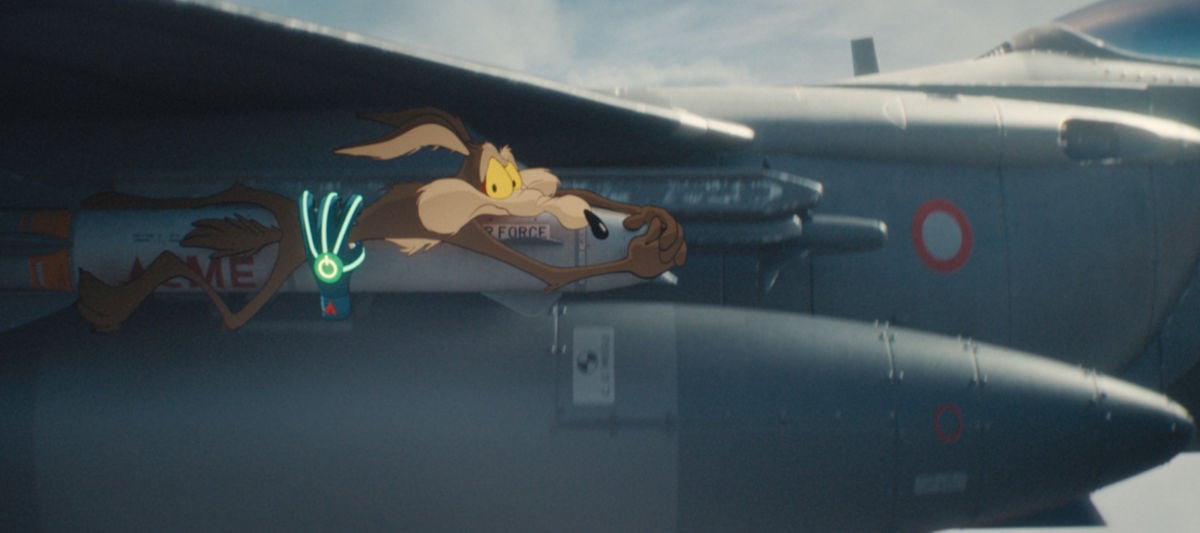
It’s also important to note that, as Wile E. Coyote doesn’t speak (even though he has before), Will Forte is performing for both of them, often giving us exposition from both sides of the argument. Forte is outstanding in Coyote vs. ACME, and while he may not be on the level of Bob Hoskins in Roger Rabbit, he’s not far behind. That’s due to the subject matter of the movie, which spends a lot of time in court. But there are enough antics and hijinks throughout that will keep everyone entertained.
Forte lifts a lot of expositional weight here, while also being funny, while also doing a lot of physical comedy, and while it’s not something easily quantified for, say, awards season, it’s one of the best all-hands-on-deck performances I’ve seen all year. While she isn’t given as much to do, Lana Condor as Kevin’s niece/law intern has to lift a lot of weight as well; she’s the voice of Kevin’s conscience as Kevin constantly tries to find the path of least resistance, especially when suing a giant corporation like ACME.
I’ve been saying for a while now that John Cena is something of a cinematic stealth missile, so much so that it shouldn’t surprise anyone any longer that he’s an insanely funny comedic talent. He’s just as good at navigating the surprising legal jargon as he is at carrying on a hilarious conversation with Tweety Bird when he’s not squeezing him like a stress toy.
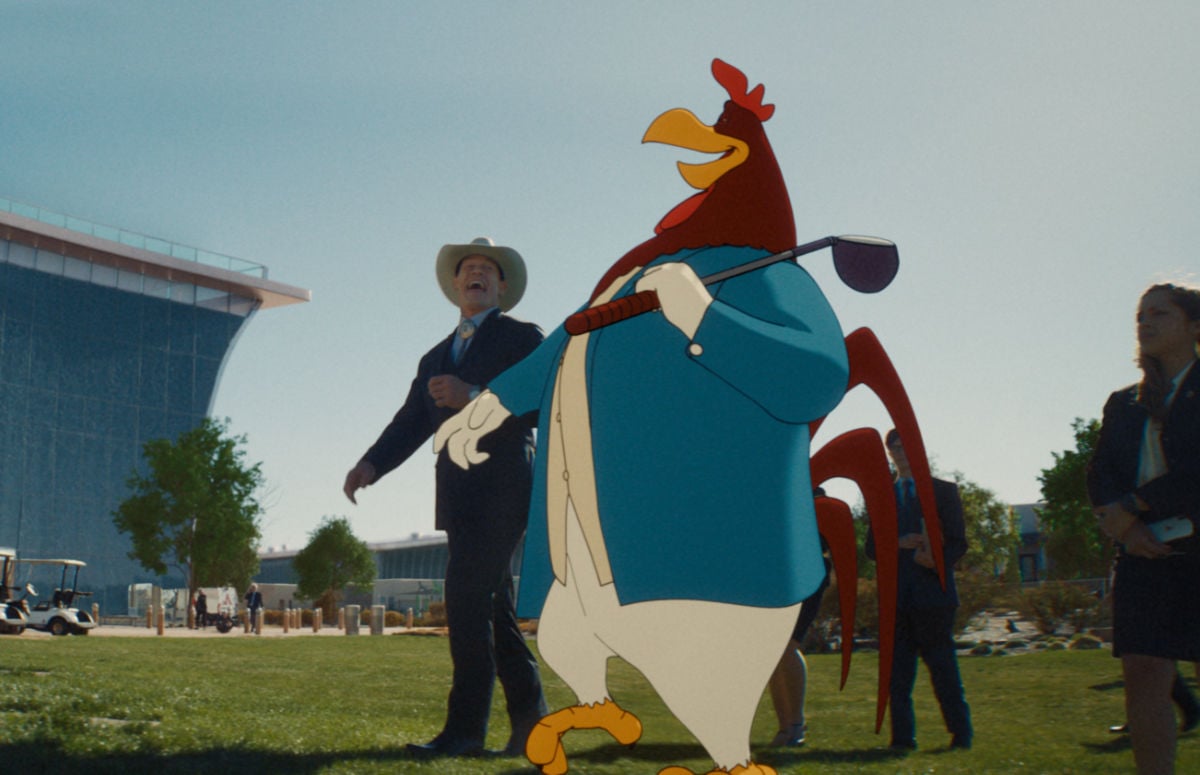
Jim Cummings voices Foghorn Leghorn, the CEO of ACME, and gives that character his customary good-old-boy charm, while expertly lacing it with sinister intent. The supporting cast shines too, especially Martha Kelly and Luis Guzmán.
To be blunt, there is no way this movie was seen by any Warner Brothers suits and deemed unreleasable. It’s just not possible. The effects, the humor, the pacing, the direction, the acting are all top-notch, and this is an impeccably well-crafted movie. There are only two possibilities here – that the film couldn’t be profitable (which I doubt, not after merchandising, streaming services, and a well-timed theatrical release), or that the subject matter was – I don’t want to use the word “dangerous,” but it’s the only word that fits.
Coyote vs. ACME doesn’t put corporations in a positive light. In this day and age, to use beloved legacy characters to tell a story of corporate malfeasance and an examination of how our world seems to be getting worse even as the technology is getting “better” feels very subversive and punk rock to me. Like 2023’s Barbie, also a Warner Brothers movie I might add, the filmmakers feel like they’re stealing the store from right under the owners, filling their films with meaning and resonance when Warner Brothers is only interested in product.
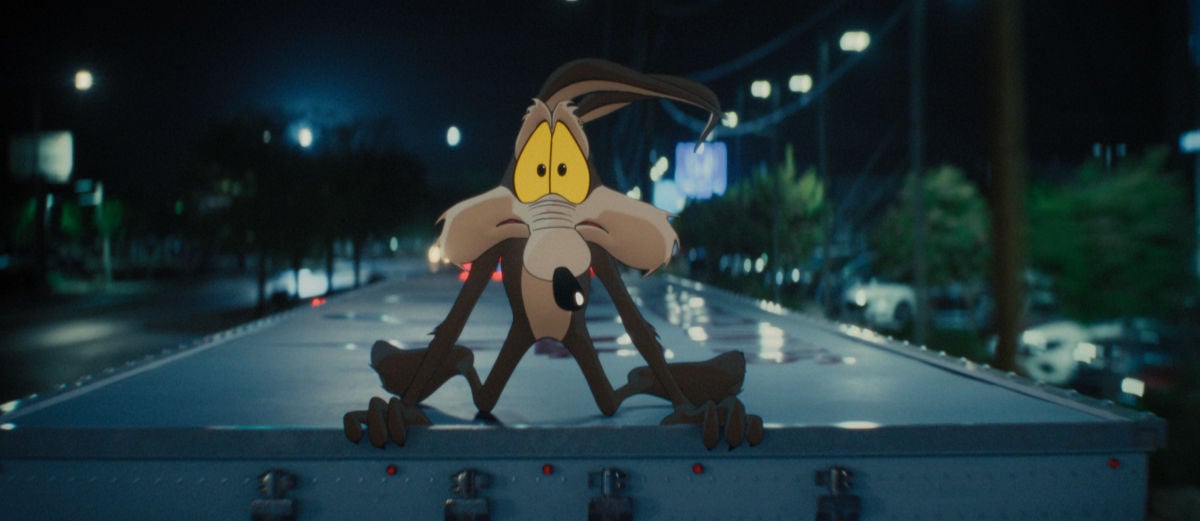
Again, that’s a pretty big weight that an ostensibly children’s film should be asked to carry. But Coyote vs. ACME carries that weight with grace and aplomb. This movie didn’t deserve to be shelved or to be quietly stuck in small theaters while bigger, more ostentatious movies take center stage. I have to thank Ketchup Entertainment for stepping up and saving this movie from being vaulted forever, and they deserve immense respect.
I didn’t expect to see a movie as subversive as this when I sat down to watch it. I didn’t expect to cry at the emotion I felt at watching this silly, heartfelt homage to those wonderful cartoons of old. I didn’t expect a movie this angry to be this funny and smart. And I didn’t expect Coyote vs. ACME to be my very favorite movie I’ve seen so far this year. But it is. It is all these things.
See it. That’s all, folks.
COYOTE VS. ACME REVIEW RATING: 10 OUT OF 10
Ketchup Entertainment will release Coyote vs. ACME in theaters on Friday, August 28, 2026. The film has been rated PG by the Motion Picture Association (MPA) for cartoon violence and some language.